
Why mycology?
Mycology (the study of fungi), is important as fungi are the most powerful drivers in global ecosystems. Understanding fungi not only teaches us how to take better care of the environment, but also to accomplish innovation across many essential industries that serve fundamental human needs. Some of these industries include:
-Pharmaceutical
-Raw materials
-Biotechnology
-Agricultural/ food
As we continue to learn how influential fungi are to our everyday lives, it is becoming more evident that many solutions live in multidisciplinary intersections.
As an industrial designer who is concerned with the ongoing anthropogenic impacts, I have invested a lot of my time trying to understand bioremediation and mycology to continue striving for innovative solutions.
Something that has fascinated me about mycology in industrial design is how a living organism can be turned into a tangible object, and it can be accomplished with highly eco-friendly processes. I have learned that from the very beginning to the very end, this organic object never stops serving a specific purpose to the environment and potentially, to us.

Process documentation: Research
Analyzing fibers, their physical attributes and makeup compositions.
Project: Myco-composite research
Why this project?
The ongoing problem of carbon emissions in the manufacturing industry has pushed scientists and designers to look for alternative ways to diminish carbon footprint. There is convincing evidence from many research projects that provide interesting results regarding the fabrication of biomaterials. There is also plenty of support from the community, which means biomaterials are slowly becoming more accepted. Bio materials, in this case, myco-composites offer a promisingly more sustainable option than some of the materials currently being used to manufacture products, packaging and even construction materials. Myco-materials also have the potential to replace current materials as they can be low cost, low emission and biodegradable. This project revolves around the exploration of composites that involve agricultural byproduct, fibers and mycelium acting as a binder.
Why is mycelium important?
Mycelium has become a popular and quite promising option to make bio materials. It acts as a binder when introduced into the proper substrates. Said substrates are always organic, most of the time being agricultural byproduct. When the mycelium and the agricultural waste are introduced to each other within the proper guidelines, the mycelium successfully colonizes the substrate, creating an interesting composite that is lightweight and offers some structural integrity.
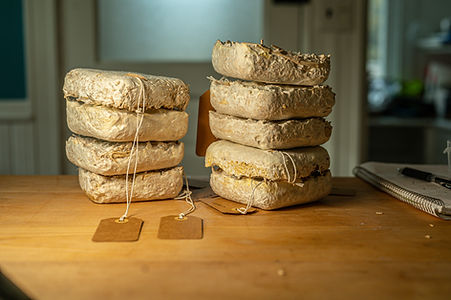


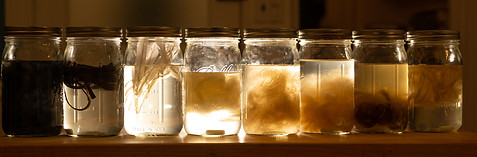

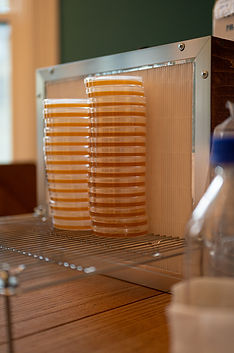

Key steps along the process:
Research: On organic and synthetic composites, composites structural integrities, agricultural practices, mycological principles of cultivation, architectural innovation, material science, fashion trends, bio composites for high performance applications, natural fiber composites.
Equipment preparation: Retrofitting and sourcing lab-capable tools in a budget conscious manner.
Substrate and media preparation and sterilization: Ensuring the subrstrates and media used are prepared the most optimal way possible to have higher chances of successful inoculation and colonization. This includes having proper proportion blends, ph balance, moisture content, nutrients, sterilization period, etc.
Supplementing substrates: Providing essential nutrients for the fungus to thrive in vitro, in a fully sterile environment.
Documenting variables in composites according to substrates and nutrients: The fungus used for my project (ganoderma sp.) behaved differently depending on the composite makup composition, temperature, moisture content and types of fiber used for structural integrity.
Colonization: Observing how the fungus behaves as it is colonizing the substrates or media. This involves documenting growth rate, moisture content, signs of stress, fruiting bodies and even contamination.
Preserving the samples for analysis: Rendering the organism inert by dehydrating it. The material samples offer a higher fidelity and more measurable result once the water content has been extracted from the material mass.
Insights & interesting takeaways:
-Big opportunity to upcycle brewer's grains as breweries struggle to get rid of it. They normally have to pay to get the spent grains collected for compost or livestock feed. The spent grains do not offer relevant nutritional value to livestock either.
-Certain composites trigger more agressive reactions out of ganoderma sp. making it create "skin-like" layers for protection. These layers have much higher tensile strength than regular mycelium.
-Many fibers can be sterilized and supplemented at the same time, making them viable for composites as they encourage fungal growth while offering unique structural integrity.
-Leathers that have been tanned with harsh chemicals can also be supplemented and sterilized, making them a viable substrate for ganoderma to colonize and break down.
-Dangerous synthetic fibers like lint from drying machines can be sterilized and supplemented to be used as substrate. As the mycelium colonizes these microplastics, it will slowly begin to break them down. This can lead to carbon sequestration, myco remediation or simply complex structural attributes in myco composites (see images below).
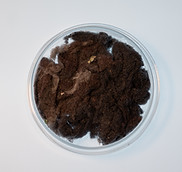
Lint: Microplastic fibers
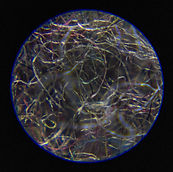
Macro shot: lint
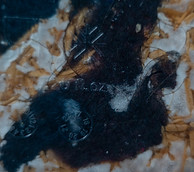
Supplemented lint being colonized by ganoderma sp.

Inert composite, final product section view
Accomplishments:
The outcome of this project opened the potential for further exploring mycoremediation or carbon sequestration by supplementing toxic fibers and encouraging fungal colonization. I also accomplished creating substrates with byproducts that are often overlooked. Through simple processes i was able to upcycle these byproducts into a material with unique structural attributes that can potentially be controlled and manipulated to create higher performing objects or structures.


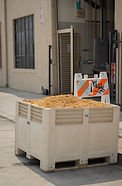
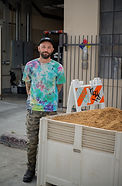

Special thanks to 1840 Brewing Company in Milwaukee, and Highland Park Brewery in Los Angeles for supporting my project by donating spent grains.
Process:
For a full process overview, access to all research documents, step by step guides and visual documentation, please scroll through the Miro board linked below.
Project: Mycelium Nike Footwear Last
Description
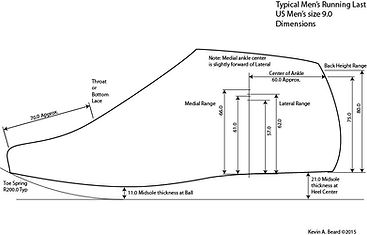
This project was initially born out of curiosity. A friend of mine brought a Nike footwear last to the fab-lab. I decided to vacuum form it with multiple types of materials and thicknesses. I wanted to use it as a mold to grow mycelium within. I felt like it would be a fun, quick experiment to accomplish a sculptural piece.



The "WHAT IF?" moment
Creating a footwear last was simple enough. It left me feeling like more could be done. And then it suddenly came to mind while I was at a park watching people play with their dogs... what if I use dog hair as a structural binder for a myco composite?
The next day I headed over to my neighborhood pet grooming shop. I asked if I could have a bag of dog hair and they gave me the weirdest look I have ever received. I went home, happy with a bag full of dog hair.
My logic told me that perhaps if no pet shops are doing anything with the hair from grooming services, given that there are A LOT of these shops in Los Angeles, this could be a readily available byproduct with lots of potential for upcycling.
Unsure of what dog breed this hair came from. It was very curly which makes it more difficult to mix with substrates, but from an engineering perspective, it should provide good structural strength to a composite.

Barely visible hyphae starting to colonize substrate

Dog hair, macro photo

Evenly placed 1.5mm holes throughout footwear last mold to provide FAE (fresh air exchange) to the mycelium.

One day post-inoculation

5 days post inoculation. Form fully colonized.
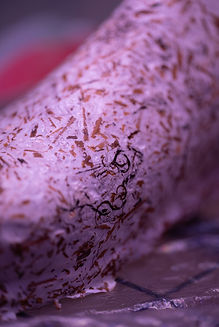
Detailed images showing mycelium binding substrate particles together.
Bigger particles: hemp hurd
Filler partices: oak sawdust
Added structure: natural fiber (supplemented dog hair)
Binder: mycelium (ganoderma sp.)
Substrate supplement: all-purpose flour


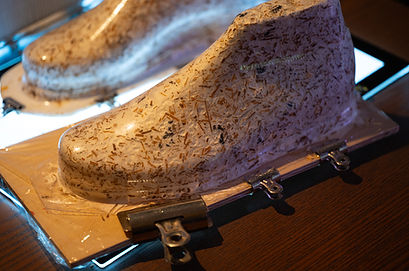


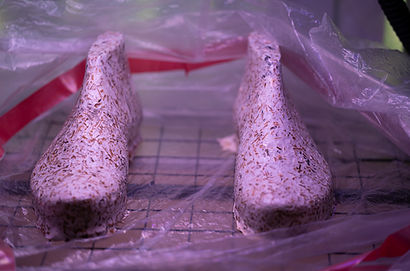
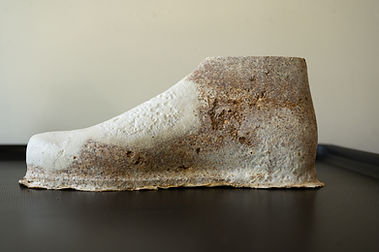
After separating the mycelium lasts from the mold, they were placed back in the grow tent to allow the mycelium to continue colonizing the surface. This only took 2 extra days and gave the lasts a full, white and velvety surface.
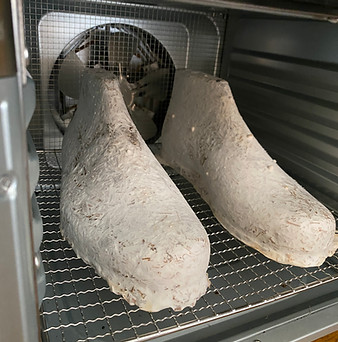
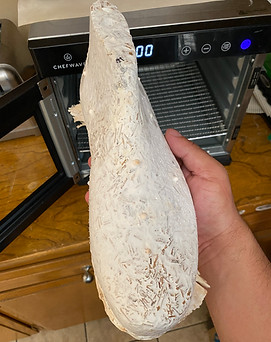
The mycelium footwear lasts were placed in a food dehydrator for 10 hours at 150°F. While the mycelium forms lost most of its weight during dehydration period, some moisture remained at the core. This was an interesting insight because after storing them away, the mycelium began regrowing. Mold also started appearing. All I had to do was leaving the lasts to dehydrate for a couple more days in the intense SoCal mid summer heat.
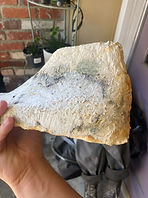


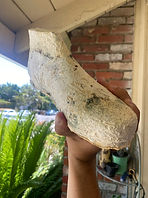
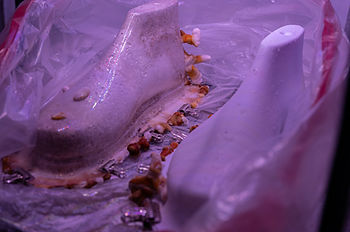
Contaminated mycelium footwear last. The plastic wrap created ideal conditions for fungi to re-grow and also for contaminants to thrive, as there was still moisture content left.
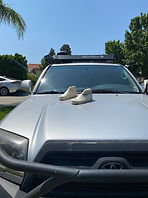
Further dehydration in open air conditions. Summer temps in the high 90°F.
Project: Media Tray: Fungal membrane
Description
Another project born out of curiosity. This project also has a more "experimentally artistic" approach.
When I learned how there are millions of spores floating around us at any given place and time, I wondered if those spores could be used to grow some type of material.
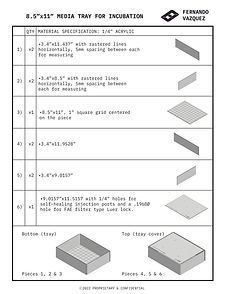
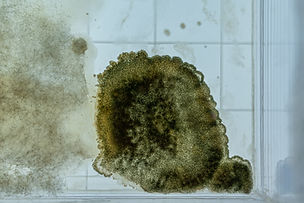
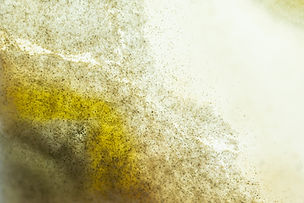
I created a tray that functions as an incubator which harbors liquid media (LME). After fabricating the trays, they were sanitized to attempt removing any bacteria. Then filled with LME and exposed to open air for a couple of brief seconds. One tray, however, was inoculated with ganoderma sp. liquid culture. This media tray became contaminated for an unknown reason.
Design drawing & fabrication of media tray


Introduction of liquid media into media trays

Sterilization of liquid media (LME) for media trays
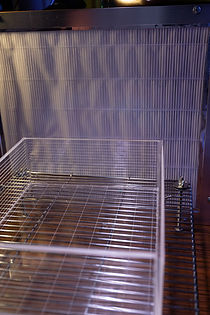
Sanitation of media trays in front of flowhood

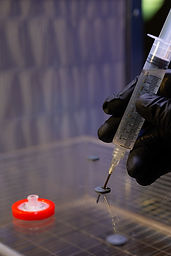
Inoculation of one media tray with ganoderma sp. liquid culture


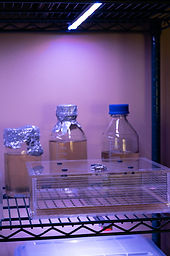
Monitoring growth in controlled light and temperature environment.
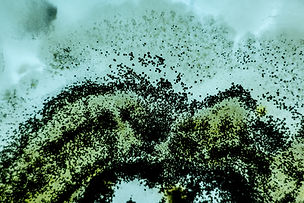
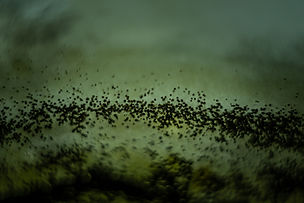
Tray 1: inoculation by airborne ascospores along with other unknown "contaminants."

This tray seemed to be colonized mainly by thrichoderma sp. along with other unknown fungi.
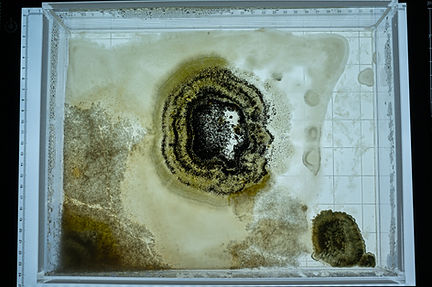
The organisms created a low-density layer of mycelium in the liquid media.
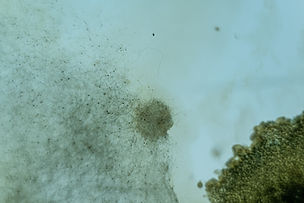
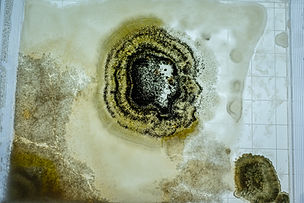
Tray 2: inoculation by injection with ganoderma sp. liquid culture. Tray became contaminated.
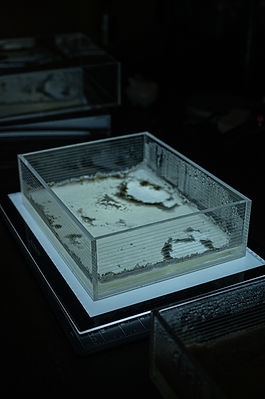

This try was colonizing properly at first with ganoderma sp. However, it quickly got contaminated with bacteria. Subsequently mold started showing up. Before contamination, ganoderma was able to create a very thin layer of mycelium.
MY TAKEAWAY:
Both results from this experiment lead me to believe that common particles we normally consider contaminants can be used to create a membrane with the potential to be turned into soft materials. These materials could be a replacement to soft plastics, leathers, laminates or textiles. If treated properly, there are opportunities to turn them into solid sheets.
Detailed images:



Project: Myco-pigments
Description
An ongoing project in which I aim to find new ways to accomplish color in, or out of mycomaterials. This can be in the form of extracts, pigments, inks, or simply by allowing a specific fungus to colonize a substrate through carefully controlled environments.
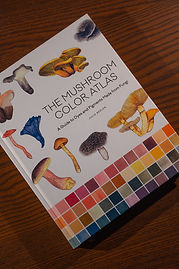
I want to acknowledge that I have in part been inspired by Julie Beeler's The Mushroom Color Atlas, a book with detailed information about ways to accomplish many colors by processing mushrooms onto textiles.

Physarum sp.
Collected in the Los Angeles mountains.
Methods to accomplish color:
•Allowing physarum to colonize desired surface
•Creating pigment with plasmodium
Colors:


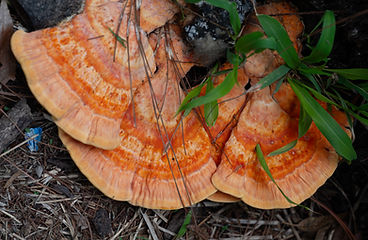
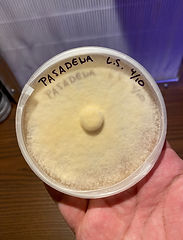
Laetiporus sp.
Left: L. sulphureus. Right: L. Gilbertsonii collected and cultured in Pasadena, CA.
Methods to accomplish color:
•Allowing Laetiporus to colonize desired substrate
•Creating pigment with mycelium.
Colors:
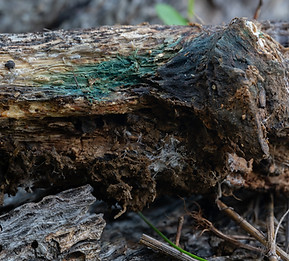
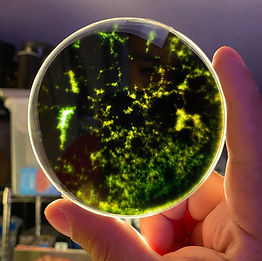
Chlorociboria aeruginascens
Left: chlorociboria I documented in the Santa Monica mountains. Right: Chlorociboria mycelium from culture I acquired from another mycologist.
Methods to accomplish color:
•Allowing chlorociboria to colonize desired substrate, textile, fibrous mass.
•Creating pigment with mycelium
•Creating color extract
Colors:
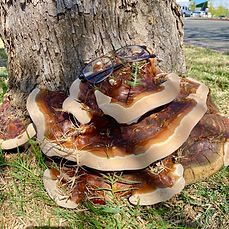
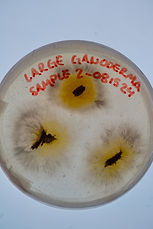
Ganoderma sp.
Fungus culture cloned from mushroom I found in Mid City, Los Angeles.
Methods to accomplish color:
•Manipulating mycelium growth and pigmentation through the use of specific substrates
•Inducing metabolites
•Triggering protective mycelial skin.
Colors:

Pycnoporus sanguineus
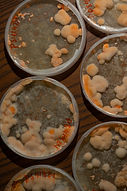
Left: P. Sanguineus I found in Mexico. Right: P. Sanguineus I cultured from sample ordered online.
Methods to accomplish color:
•Allowing Pycnoporus to colonize desired substrate
•Creating pigment with mycelium.
Colors:


Project: Waves
Regarding Pycnoporus sanguineus and ganoderma sp. (possibly g. sessile):
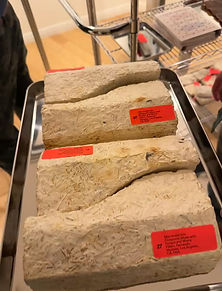
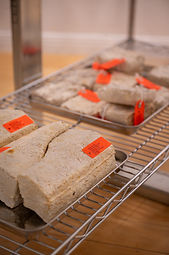
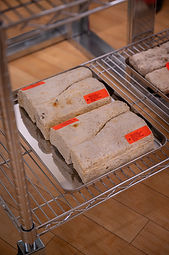
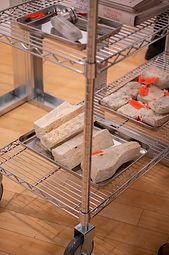
One of my most recent projects, and still ongoing, aims to deliver a large sculpture composed by many interlocking mycelium blocks with multiple finishes and dual color; firy orange and off white.
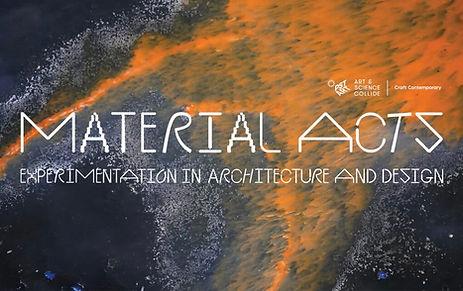
Some successfuly grown myco composite blocks for this sculpture were displayed at a biomaterial art exhibit in Los Angeles called Material Acts, hosted by Craft Contemporary.
Updates on this CMF project coming soon.
Waves: Concept renders


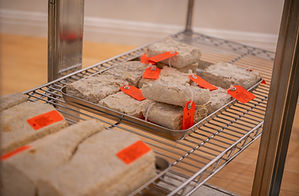
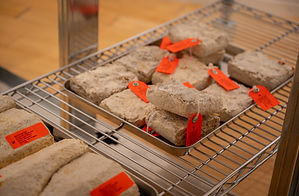
Waves: Pieces displayed at Craft Contemporary along with other myco composites and bioplastics






More coming soon...

Check out my iNaturaist page to see more of my fungi documentation and photography.